Purslane: Free Food
I know that I have written about purslane before, but I thought that it deserved a second look. This is a “weed” that appears every year in my garden in spite of the fact that I have never planted it. It comes up everywhere. Most people with gardens will recognize it as one of the more numerous weeds that they deal with.
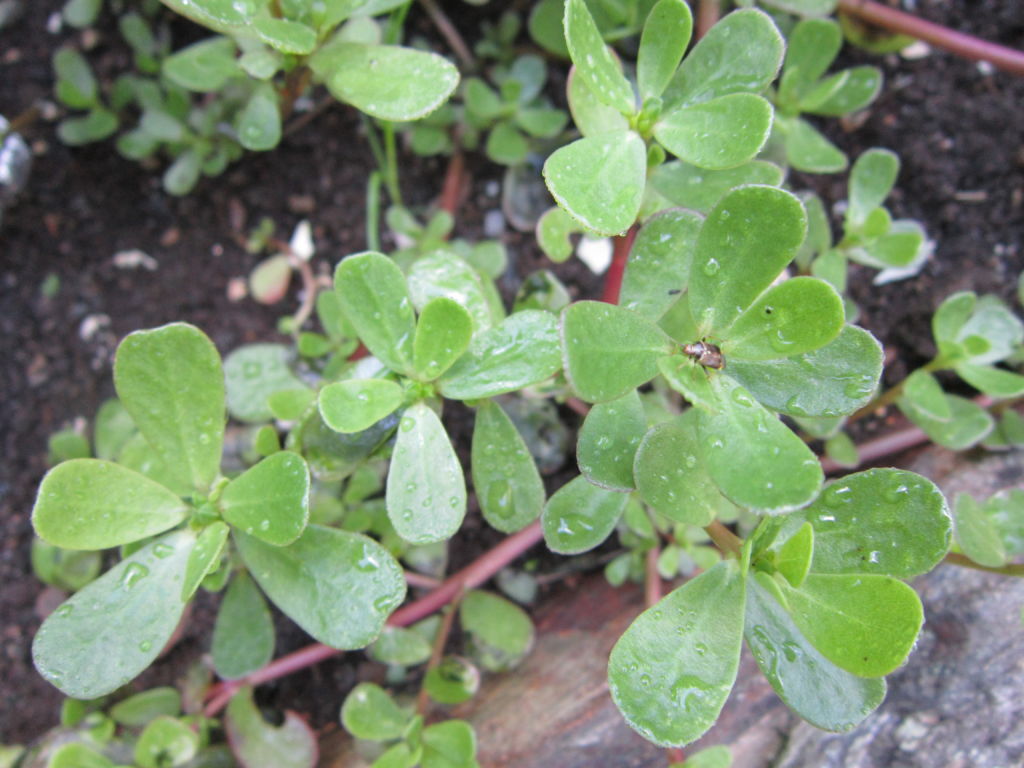
Yet, few realize that this particular weed is probably the most nutritious thing growing in their gardens. It’s a succulent which grows low to the ground and I let it flourish where it isn’t bothering my crops. Here’s a photo of it growing around my parsley.
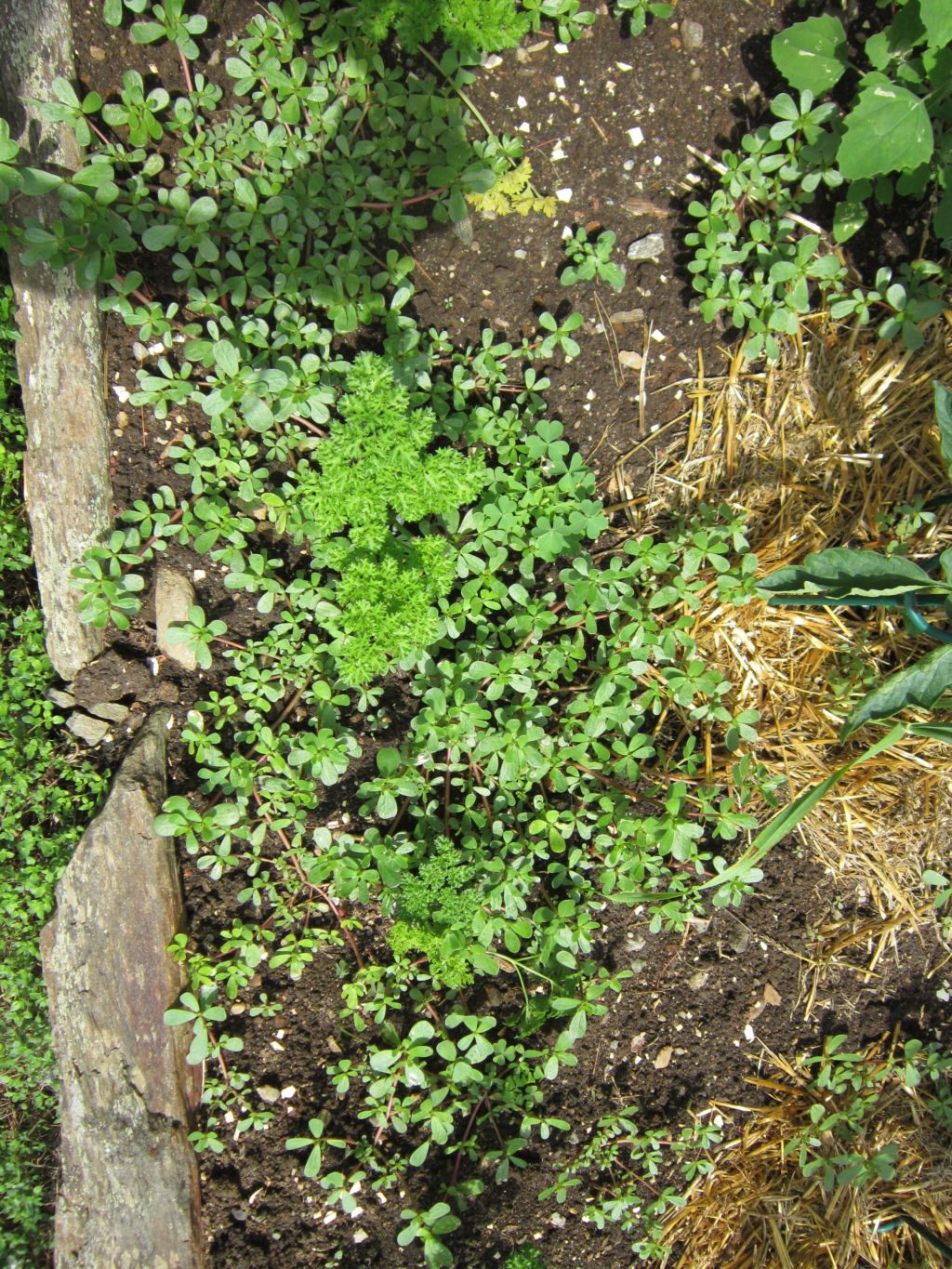
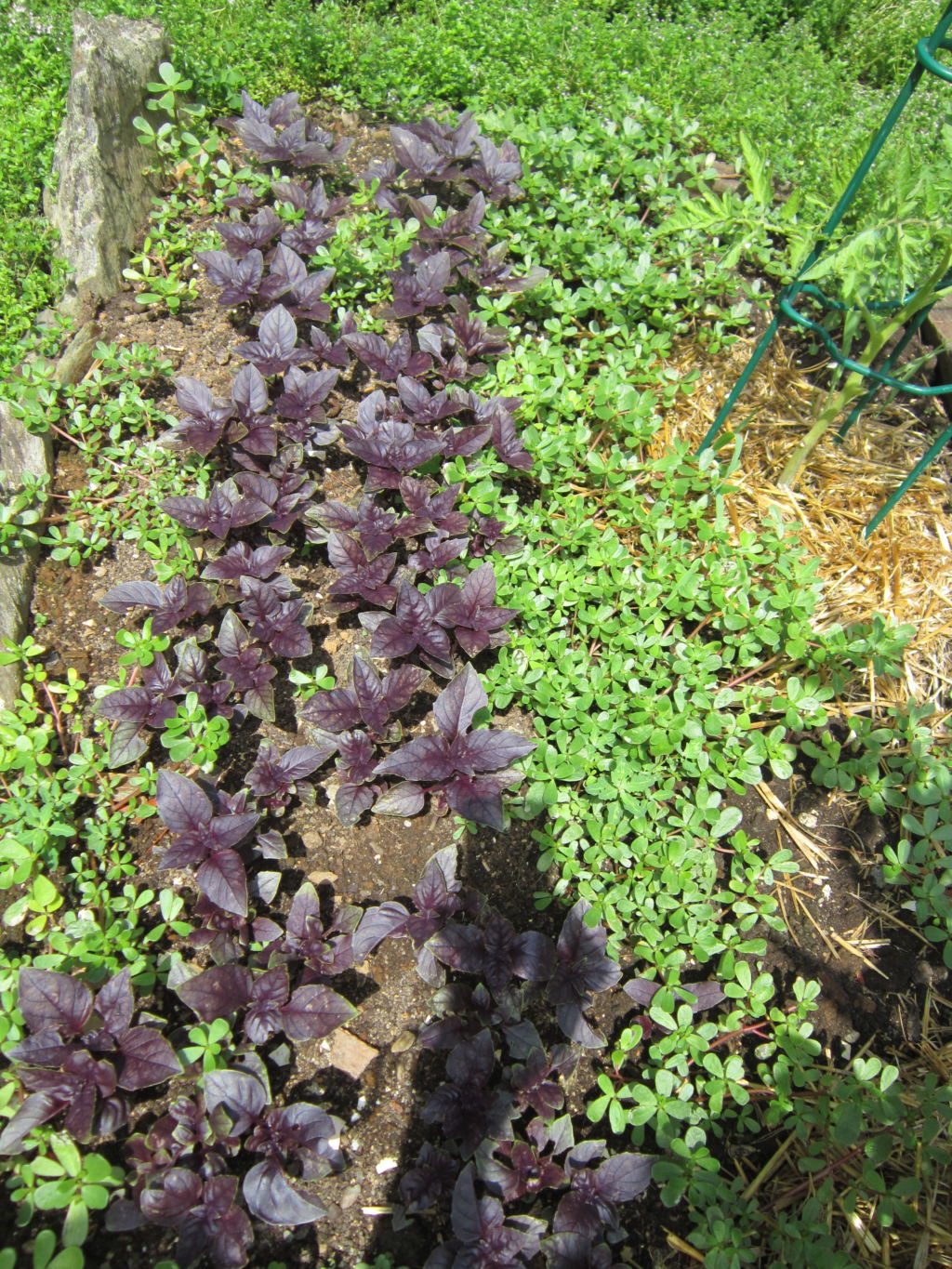
And another of it growing around my purple basil.
According to Jo Robinson in Eating on the Wild Side, “A wild plant called purslane has six times more vitamin E than spinach and fourteen times omega-3 fatty acids. It has seven times more beta-carotene than carrots.” I have read that it actually has more omega-3s than some fish oils. Many believe that it improves vision, is good for our bones, treats gastro-intestinal diseases and helps to prevent cancer.
When I pick it, it pulls up easily and I cut off the root. Then I wash it well. For immediate consumption, I cut it into one inch pieces, stems and all, and stir-fry it in butter for just a few minutes turning often. I serve it tossed with two cheeses, grated cheddar and powdered parmesan. Add a dash of salt and it is delicious!
I also like to put it in the freezer in order to add it to my bone broths in the winter. For this, I steam it for just a few minutes, stirring often, until it barely begins to wilt. Then I place it in a bowl which I place in another bowl of ice water. Once it cools down, I put it in bags and into the freezer it goes.
What’s not to like? It’s delicious, nutritious and free food!

These 100% grass fed beef sticks are also FERMENTED!!! And really delicious!
Celeste,
Is purslane purchased from a garden center the same plant as wild purslane? If yes, would the garden center purslane be ok to eat or do you think it has been treated with chemicals?
Thank you for your response, Bonnie
Celeste, I had a great time meeting you at the Distant Hills Garden Sunday. Yu told me about your purslane article so I looked it up. To be honest i am not sure I can identify it if it was in my garden.
Can I come to visit you and see your gardens?