
Freezing Corn
For all of the things that I do in the summer, freezing corn is the biggest bang for the buck. It doesn’t take very long, it is reasonably priced and I get to enjoy beautiful sweet corn all year long.
I don’t grow corn myself as it is important to have a big “stand” to get good germination. Unlike other garden items, corn isn’t pollinated by the bees, but, rather, by the wind. Each silk goes to a specific kernel and needs to be pollinated individually. Corn also only takes six hours from when it is picked to turn from a sugar into a starch. So it’s important to process it early in the day.
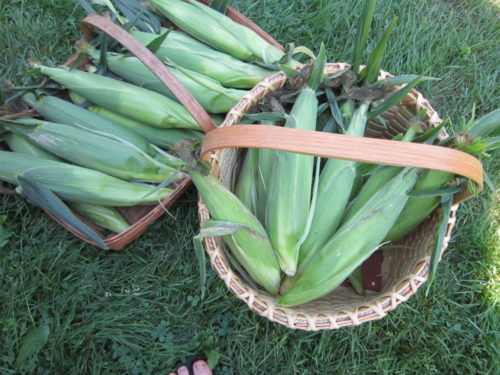
I head down to my local organic farm after it opens. It’s about a twenty minute ride. I pick out about three dozen ears making sure that they were just picked. Once back home, I put some water on to boil and shuck the corn.
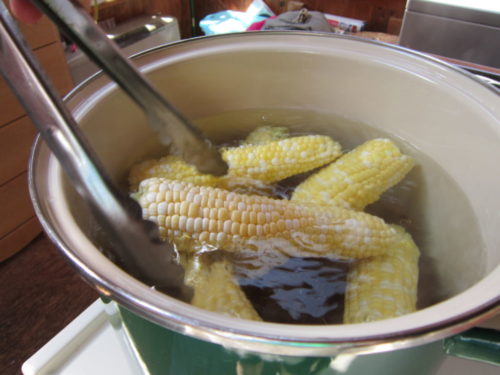
Placing six ears at a time in the water (you can also steam them if you prefer), I leave them in for three minutes.
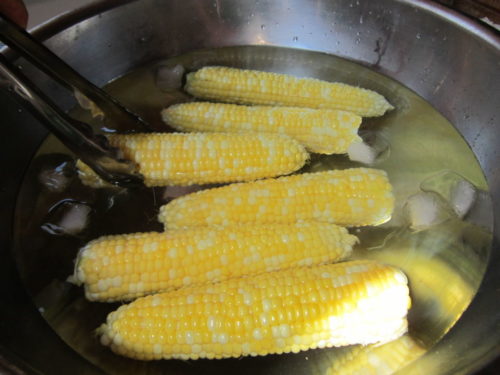
When they come out, they go into ice water to cool them down.
Cutting the corn off of the cobs, I put it into a bowl, then into freezer bags. I usually get about eight quarts from 2 ½ dozen ears (we eat the rest).
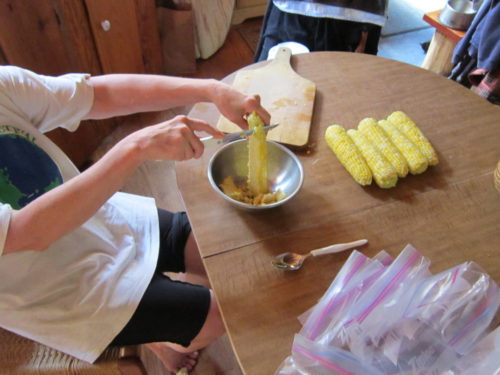
Labeling it with the year, into the freezer it goes.
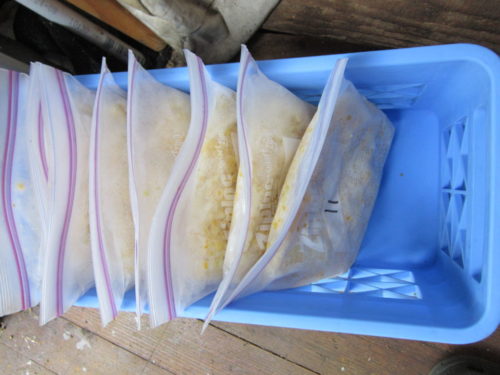
This whole process takes me about two hours. So for very little time and money, I get to add sweet corn to soups and stews all winter long. I often use only a quarter or third of a bag at a time. It is well worth it.

These 100% grass fed beef sticks are also FERMENTED!!! And really delicious!


Have you ever tried a corn cutter instead of the knife to cut the corn. It is much fasting than using the knife.