
Planting Garlic
Garlic isn’t really like most of the crops. It actually never stops growing. Planted in the fall, it will begin its process immediately, continue under the snow and grow until it is ready to harvest in July. It is actually one of the easier things to grow as it has few diseases and insects don’t like it much.
Planting the Garlic
The ideal time to plant garlic here is in the middle of October. I always save my biggest and nicest cloves to put back into the ground because that keeps the garlic growing bigger and better each year. If you are new to planting garlic, buy your cloves from a local nursery. Don’t try to plant garlic that has been purchased from a grocery store as some of it is treated to slow or stop its growing.
Pick a nice, sunny spot—garlic, like most crops, needs six to eight hours of Sun a day. Make sure that it is not downhill from any pesticide-laden ground, not next to a road where the winter’s salt can splash up on it, too close to shrubs whose roots could crowd it out or in a low spot where rains puddle for a few days. Clean out the bed and fluff up the soil with a broad fork or a pitchfork then add some soil amendments. Good choices are aged chicken or cow manure, compost, Azomite powder (A to Z of minerals including trace elements), organic alfalfa meal, kelp meal and greensand. I generally put these right on top of the soil that is already there. Next, gently pry the bulbs apart being careful not to damage them. I use a flat knife without a sharp edge, place it between the bulbs and twist. I then use my dibble to put holes in the ground about three inches deep and eight inches apart. This could be done with a pointy stick as well. Place one individual bulb in each hole being sure to put the root side (not the pointy one) down. Garlic really hates to be planted upside down. Cover with remaining soil and gently tamp it down.
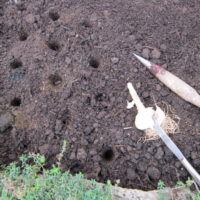
Next, I like to mulch the garlic as this gives it some protection from the freezing/thawing cycle which goes on during the winter. I generally use leaves as they are all over my garden already. I put a good three or four inch blanket down and place my leftover sunflower stalks on top to keep the leaves in place. If it is really dry, I will water it. After that, it is done. Nothing more needs to happen until the spring when I take off the mulch.
In the Spring
The garlic itself will actually grow underneath the mulch and it is usually about three inches tall by the spring. It is now an ideal crop to be delicious when it is harvested in July. Take off the scapes when they appear in June. These are the “flowers” of the garlic and should be cut off just above the tallest leaf.
Harvest Time
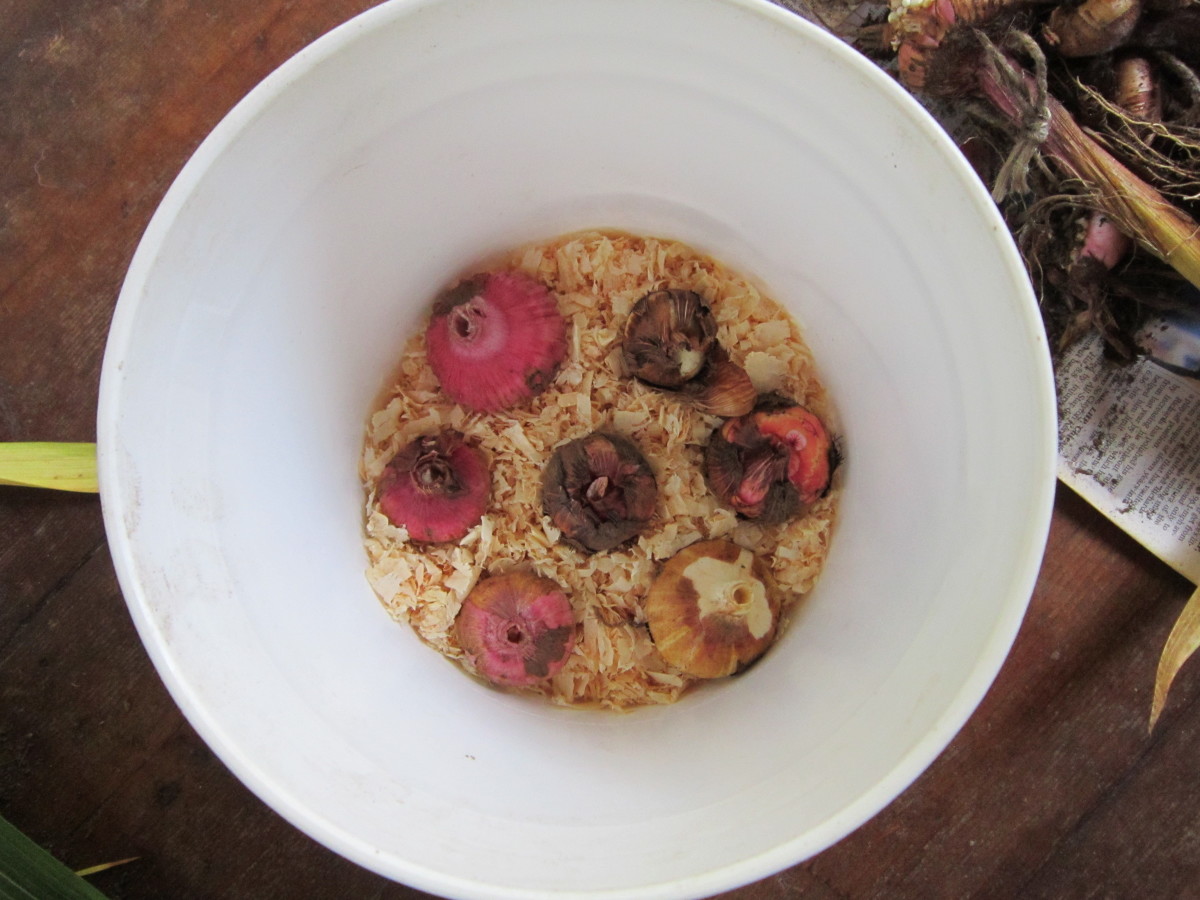
As the days get hot and long, watch for the time when there are four green leaves left on the plant. This is harvest time. I then tie mine in bunches of eight and hang them up on the porch or anywhere that is shady and breezy.
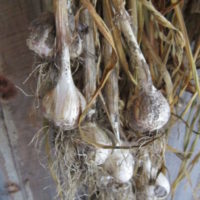
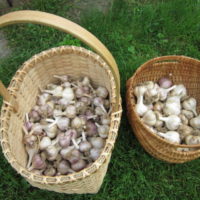
After a month, I cut the garlics off, trim the roots and place in two baskets, one for replanting and one for eating. Happy gardening!
I have some beautiful dried edible flowers and other herbs for sale on my web site.
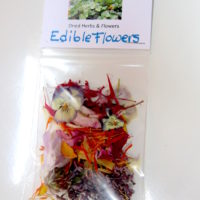
Check it out here: https://celestelongacre.com/buy-dried-herbs-edible-flowers/

These 100% grass fed beef sticks are also FERMENTED!!! And really delicious!
Is starting garlic and onion by seeds about the same process ?