French Onion Soup

French onion soup is a perennial favorite. It’s rich, hardy and delicious. Ideally, the flavors are complex and well mixed—this occurs better if it is made the day before it is eaten.

My mother, who was of French descent, swore that real French onion soup was made with turkey stock. Most chefs use beef stock. I think that it can be delicious either way, but I do often choose my late November jars when given a choice. Here’s what is needed:

stock pot

2 pint jars home made soup stock

4 large onions

3 tablespoons butter

salt to taste

optional:

4 slices sourdough bread

mix of cheeses

serves 4

Put the stock pot on the stove with the butter in it. Warm the butter so that it is melted, then turn off the stove. Peel the onions, cut each in half, then slice thinly and add to the pot.
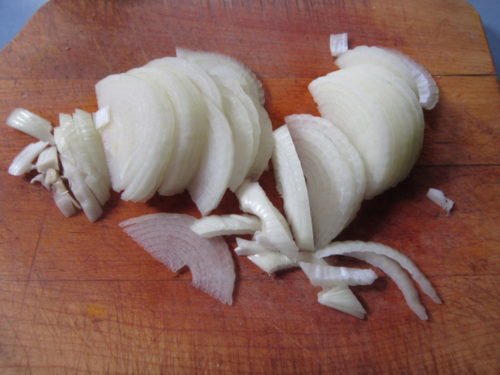
When all of the onions are in, turn the heat on medium-high and saute until they are soft turning them vigorously the whole time (about 15 minutes).
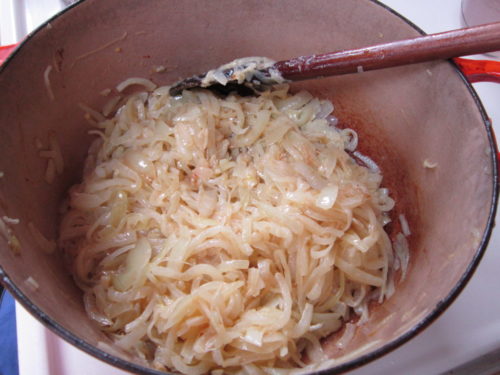
Add the stock and heat up to the boiling point.
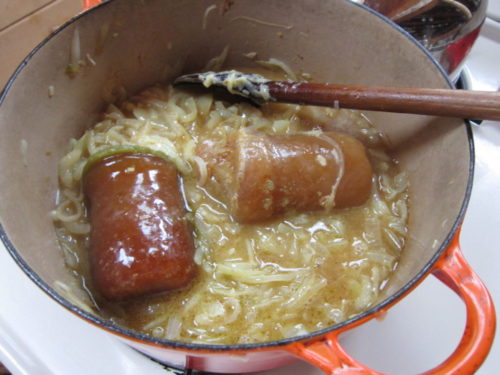
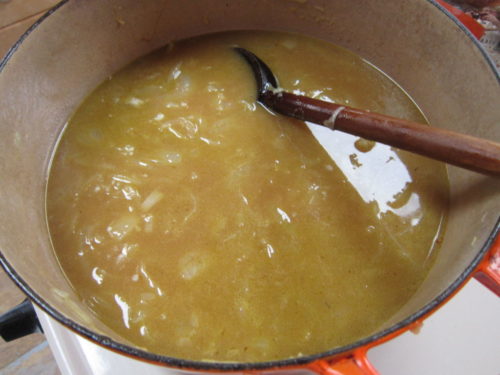
Turn off the burner, let cool and refrigerate overnight.

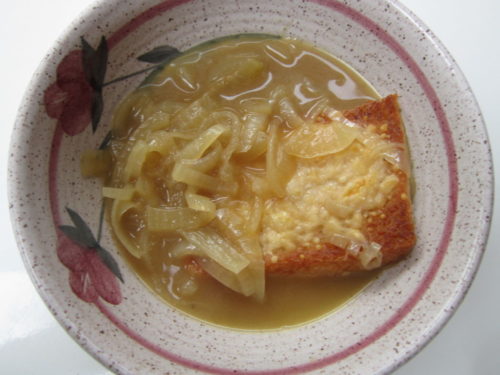
The next day, take the 4 pieces of bread and cover with grated cheese (can be gruyere, cheddar, or parmesan or a combination). Traditionally, the soup is heated first and placed in the bowls. The bread is then placed on top and everything goes under the broiler until the cheese bubbles. Doing it this way, the bowls come out of the oven quite hot. If you will be serving children or need to take your soup to a pot luck, this may be a better option: Put the pieces of bread on a baking sheet and broil them until the cheese is melted. Heat the soup. Put one slice of bread in each bowl and cover with soup. Yum!
Share

Similar Posts

  • Tomato Juice

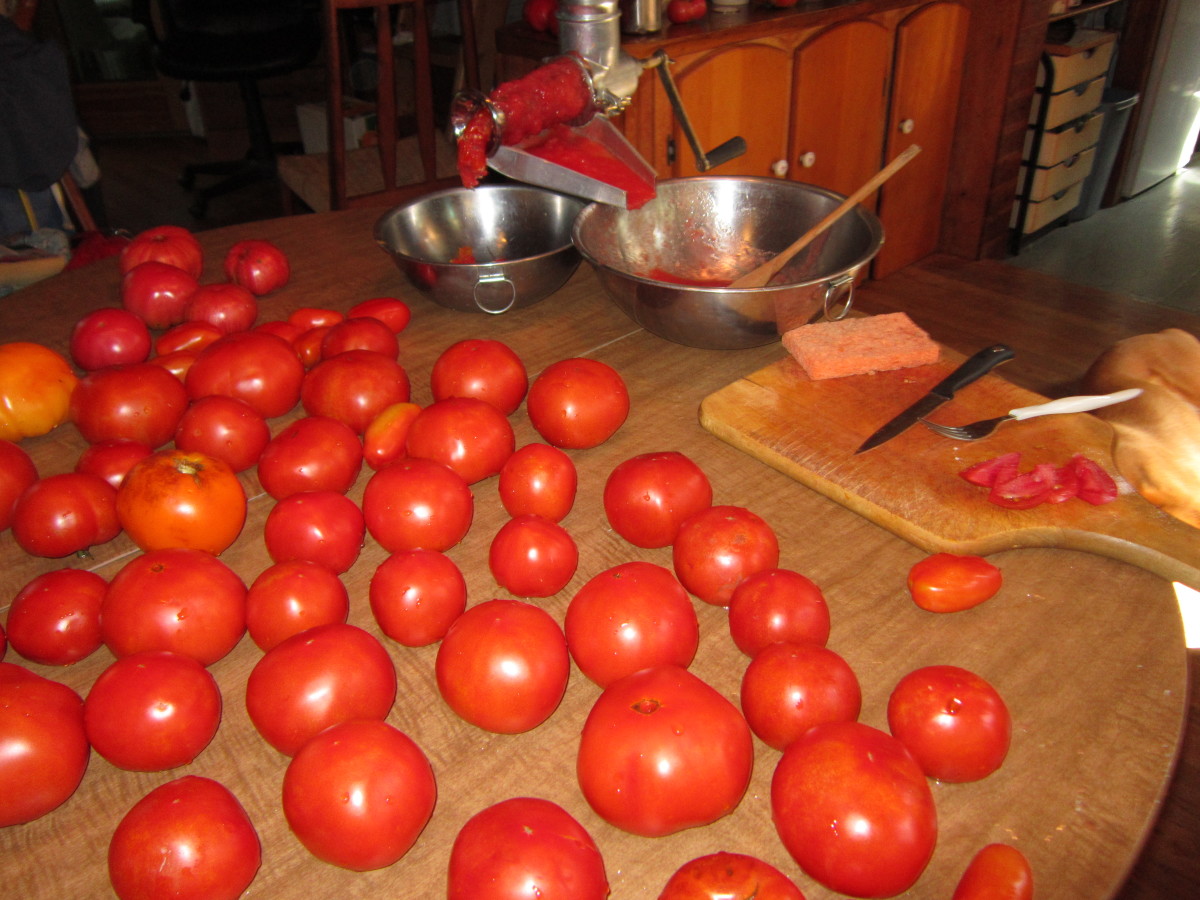
    I was supposed to teach a canning class yesterday but not enough people signed up for it. I suspect that the weather was too nice—a beautiful late summer day. Since I had already ordered a box of organic tomatoes from my local farm, I decided to make some tomato juice.

    Share
  • Ketchup

    Condiments have been part of our diets for a very long time. However, our ancestors, without access to refrigeration, fermented all of their condiments. Mayonnaise, ketchup, pickles, relishes and sauerkraut were routinely subjected to this form of preservation. What they maybe didn’t know was that the fermentation of their condiments gave them tremendous health benefits….

    Share
  • Planting Veggies Inside

    Planting veggies inside in order to transplant them outside when in season is tricky. For one thing, you definitely need a greenhouse or a truly southern window (or grow lights) for them to be able to get enough Sun. if you are new to gardening, let the nurseries do it for you. However, if you…

    Share
  • Winter Sowing

    My friend, Jackie Caserta, told me that she had come across a very interesting idea about sowing seeds. A woman by the name of Trudi Davidoff claims that she sows many seeds outside in the winter. She says that they do better than any that she starts inside to later transplant into the garden. So…

    Share
  • Planting Mache

    Mache is an extremely nutritious green that can be added to salads during the winter months. Here, in the northeastern U.S. where it is cold (and frozen), mache can be grown in a sunny window inside. This vegetable actually likes the cold—it won’t germinate until temperatures stay consistently below 70 degrees F. So it is…

    Share

Leave a Reply

Your email address will not be published. Required fields are marked *