French Onion Soup
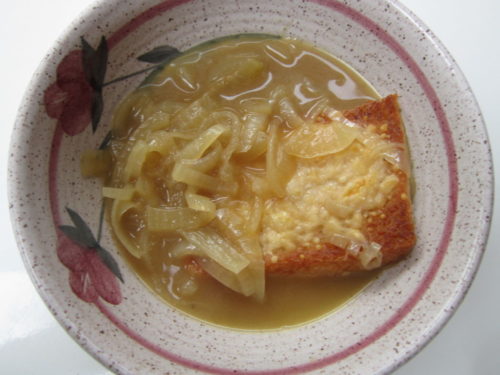
French onion soup is a perennial favorite. It’s rich, hardy and delicious. Ideally, the flavors are complex and well mixed—this occurs better if it is made the day before it is eaten.
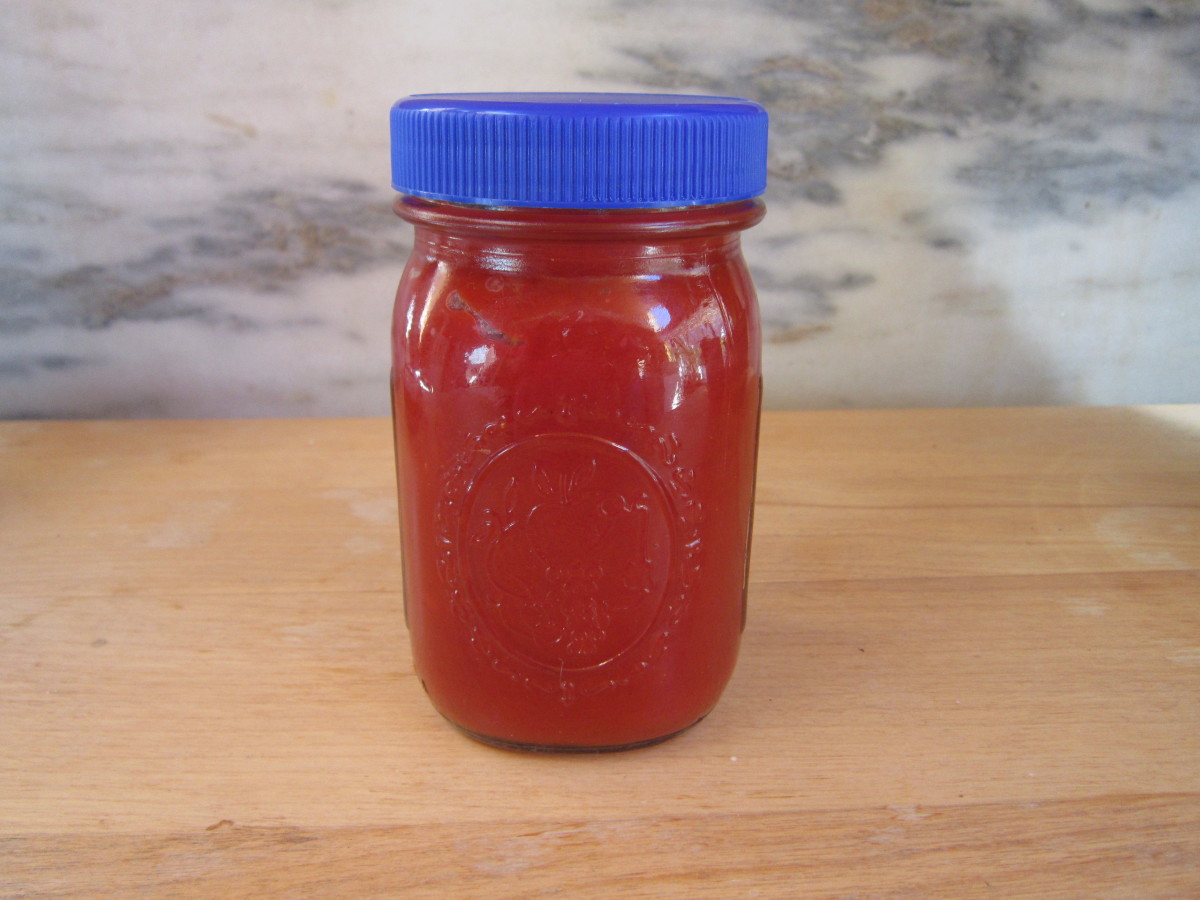
My mother, who was of French descent, swore that real French onion soup was made with turkey stock. Most chefs use beef stock. I think that it can be delicious either way, but I do often choose my late November jars when given a choice. Here’s what is needed:
stock pot
2 pint jars home made soup stock
4 large onions
3 tablespoons butter
salt to taste
optional:
4 slices sourdough bread
mix of cheeses
serves 4
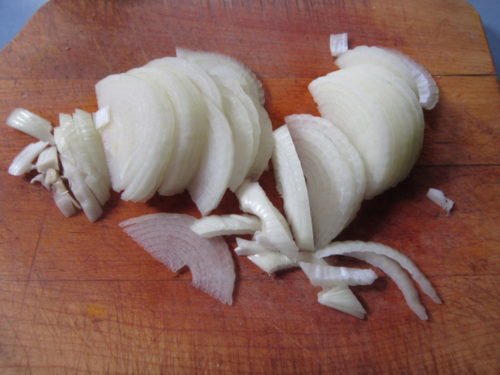
Put the stock pot on the stove with the butter in it. Warm the butter so that it is melted, then turn off the stove. Peel the onions, cut each in half, then slice thinly and add to the pot.

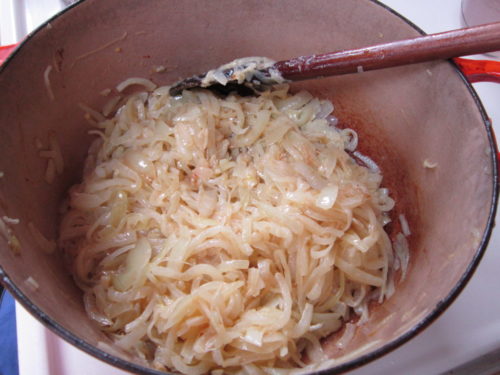
When all of the onions are in, turn the heat on medium-high and saute until they are soft turning them vigorously the whole time (about 15 minutes).
Add the stock and heat up to the boiling point.

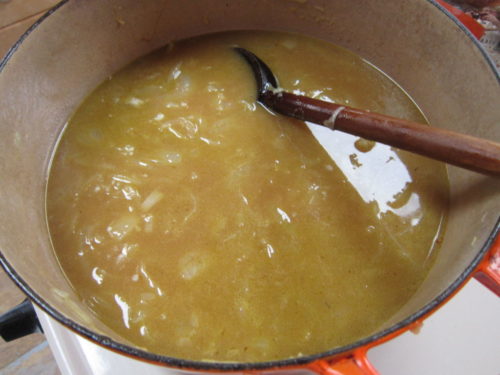
Turn off the burner, let cool and refrigerate overnight.
The next day, take the 4 pieces of bread and cover with grated cheese (can be gruyere, cheddar, or parmesan or a combination). Traditionally, the soup is heated first and placed in the bowls. The bread is then placed on top and everything goes under the broiler until the cheese bubbles. Doing it this way, the bowls come out of the oven quite hot. If you will be serving children or need to take your soup to a pot luck, this may be a better option: Put the pieces of bread on a baking sheet and broil them until the cheese is melted. Heat the soup. Put one slice of bread in each bowl and cover with soup. Yum!