
Preparing Potatoes for the Root Cellar
I have almost never met a potato that I didn’t like; baked, fried, mashed or in salads. So I plant a couple of beds of different kinds. This is the “harvest the Kennebec’s day.”
Begin by loosening the soil with a pitchfork. Place the fork at the very edges of the plants in order not to spear the potatoes which would render them unstorable. Then, gently, with gloved hands, feel around near the base of the old plant for the spuds. Potatoes will grow above where they were planted so the crop tends to be close to the surface of the soil.

Lift out the potatoes and place them in a basket. They will need to be sunned for about ½ hour on a side to get them dry enough to store. Do not wash. Spread them out on a sheet or other dry surface. Turn after ½ hour. Be careful not to leave them too long in the Sun. The exposure could turn them green and make them inedible.
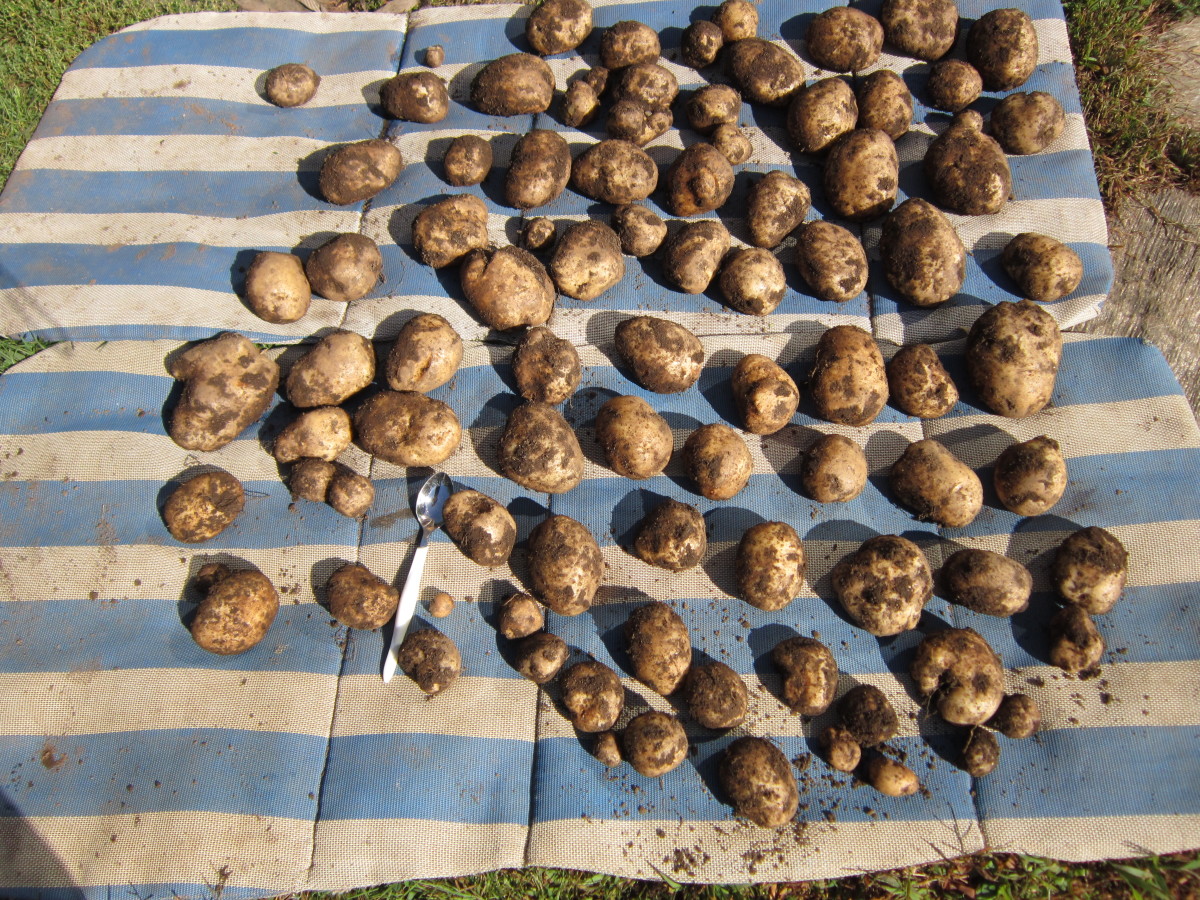
Once dry, gently brush off the excess dirt.
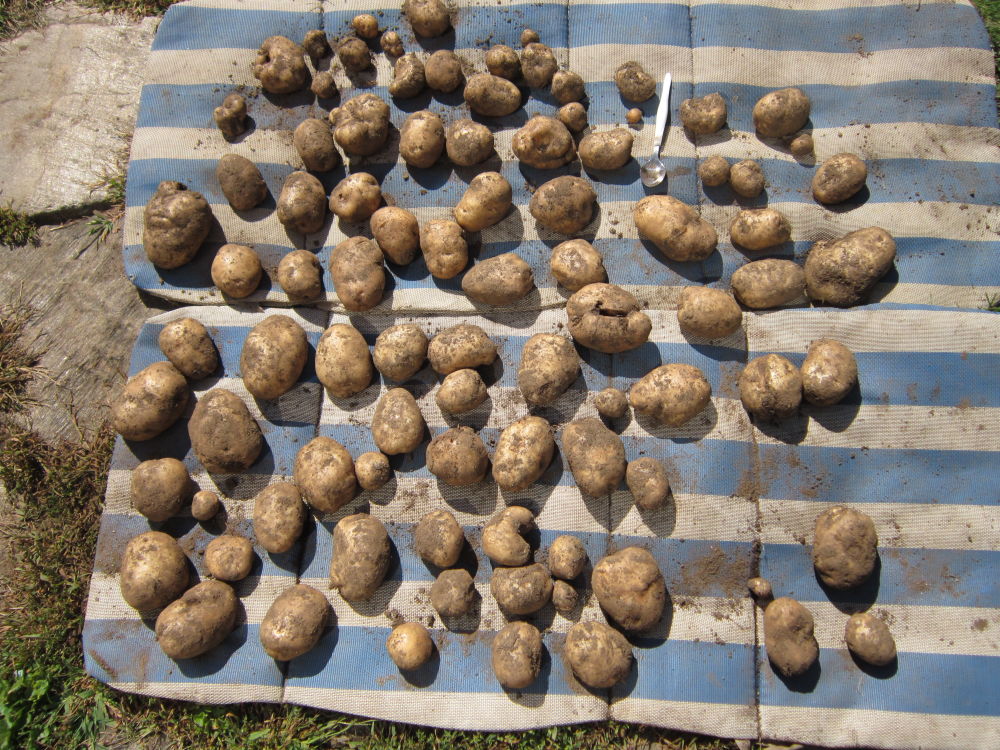
Any that are nicked, dinged or bitten into need to be set aside to be eaten soon (there were about 5 pounds of these in this batch). Ones that are questionable but look okay should be placed in a bag to be eaten next. The rest go into a crate. Just be careful not to pile them too high—the weight of the ones on top could crush the ones on the bottom and make them all rot. Place the bag on top of the rest and put into the root cellar.
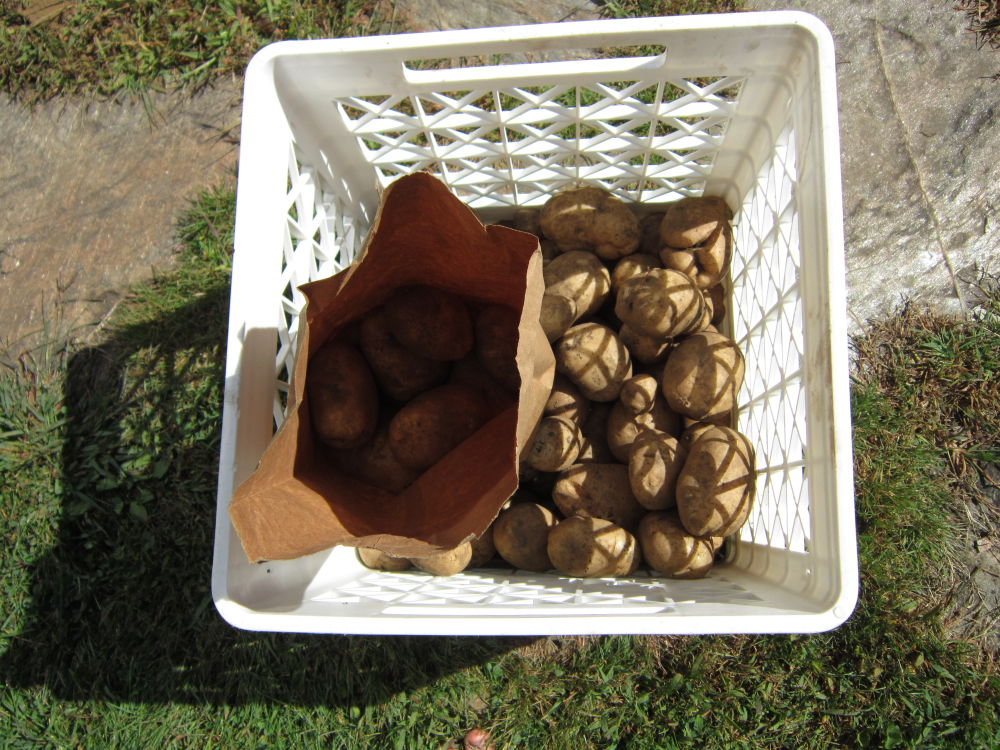
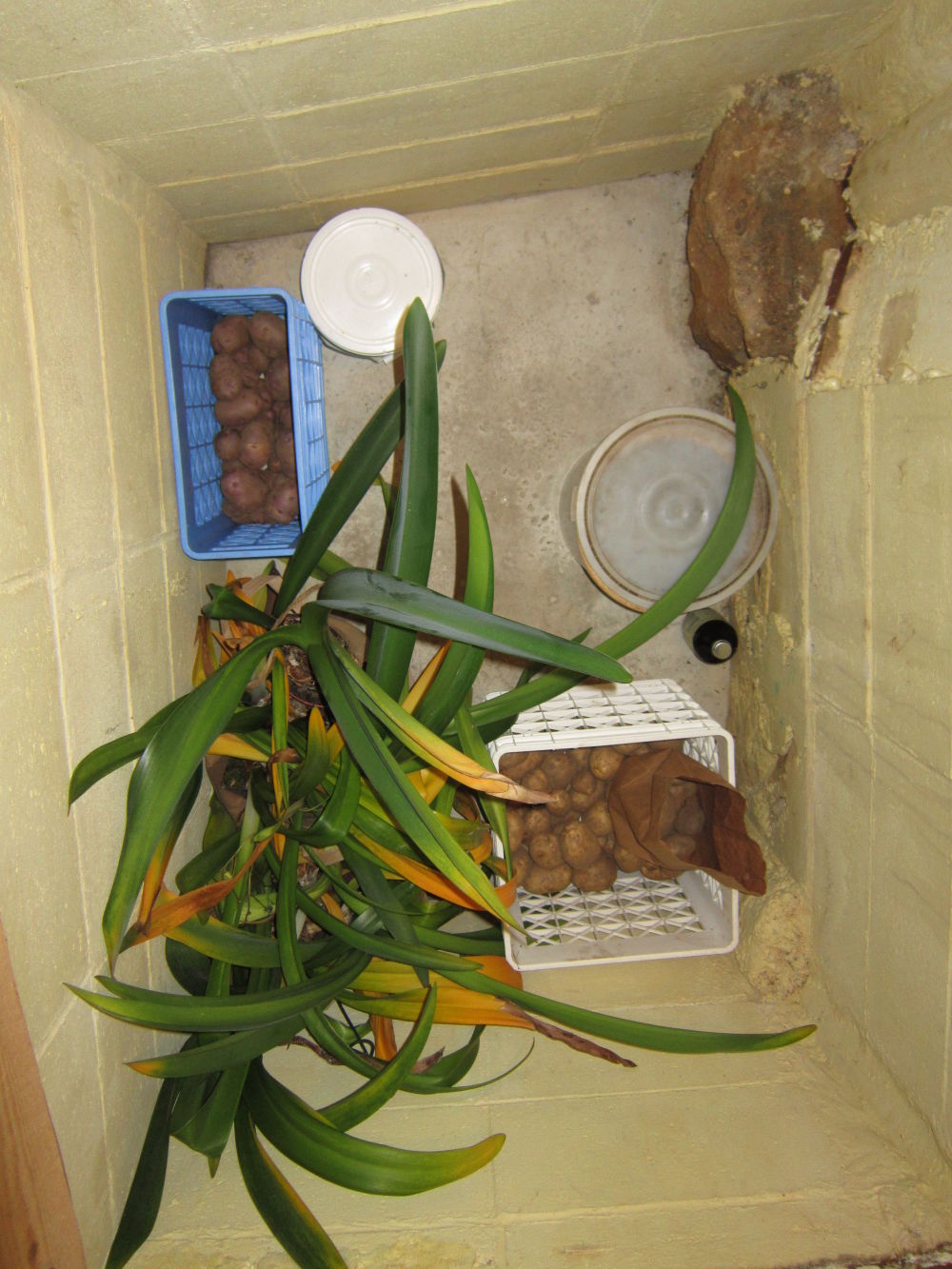
Our root cellar is just beginning to fill up….

These 100% grass fed beef sticks are also FERMENTED!!! And really delicious!

What is the plant in the root cellar?
Hi Cindy, The plant in the root cellar is amaryllis. I put them down there in the middle of August, then take them out one at a time starting in October for winter blooms. The greens die back on their own and I scrape out the top two inches of soil in the pot and replace it with new.